

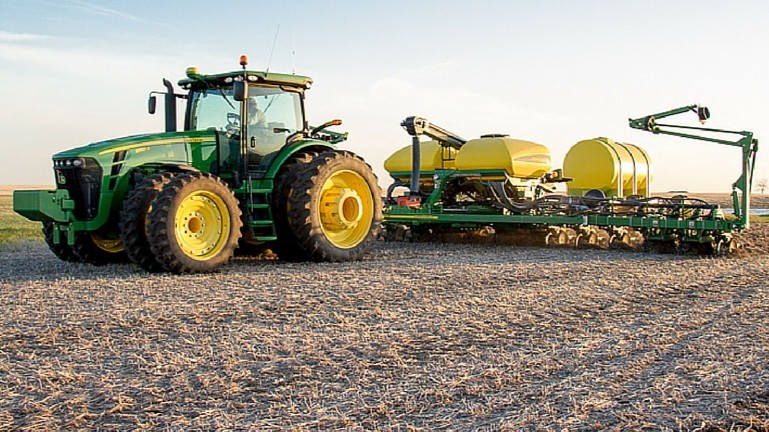
Three growers across Kentucky look ahead to spring planting
By Chris Aldridge
Kentucky Ag News
FRANKFORT - Spring is here. Kentucky Ag News asked three crop farmers in the three geographical regions of Kentucky about their plans as planting approaches.
Brandon Hunt of Christian County, the first Kentucky farmer elected to the National Corn Growers Association’s Board of Directors, represented western Kentucky.
Drew Langley of Hardin County spoke for central Kentucky farmers, and Mike Calebs of Laurel County was the eastern Kentucky representative.
“We’re always optimistic,” Langley said. “Times have been challenging the last few years, but the Lord’s blessed us and we’re hoping that continues.”
What are you planting this spring?
Calebs: “We’ve established a strong horse hay market. We sell premium horse quality hay. I used to be a big tobacco grower, but I planted alfalfa and timothy hay, a perennial cool-season grass…. And we’ve been marketing sweet corn and other vegetables for a couple of generations that we sell at the farmers’ market. We also grow corn to feed our livestock.”
Langley: “We stay 50/50 (equal amounts of corn and soybeans). I try not to outguess the markets.”
Hunt: “Corn, (winter) wheat, soybeans, tobacco, and maybe (industrial) hemp.”
Was your crop choice this spring influenced by market prices or input costs?
Langley: “No. I have most of my inputs locked in, but it’ll affect a lot of guys. I think you’ll see acres that were going to go to corn go to beans.”
Hunt: “No. The west side of state is pretty much set because of how much (winter) wheat we grow.”
Calebs: “No. I’ve got hay stands that are 30 years old.”
When do you begin planting?
Hunt: “The first of April. The date when we start planting sometimes depends on flooding issues, but the lion’s share is a set rotation. A high percentage of corn in western Kentucky is double cropped behind winter wheat. We begin cutting wheat around the first of June.”
Langley: “We start planting soybeans the last week of March and start corn around the first of April.”
Calebs: (doesn’t apply because hay is a perennial)
Do you look at weather forecasts to determine when to plant?
Hunt: “I use a weather service out of Indianapolis called Clarity by BAM weather. We track incoming weather, especially coming into April, when we can get some cold snaps. Soybeans are more forgiving, but after you plant corn, you have to make sure it doesn’t have a temperature dip because it only takes six or seven days for it to come up (out of the ground).”
Langley: “I’ll look at the low temperatures. Once they’re not too low, I’ll roll on planting beans. I’ll wait until it’s a little warmer on corn. I like soil temperatures to be in the low 50s. We take a soil probe and make a two-inch reading.”
Calebs: “We plant corn when the leaves of a poplar tree (also called a cottonwood or aspen) are as large as a mouse’s ear. That means the soil temperature is 58 degrees at a depth of two inches. That’s an indicator as good as listening to the National Weather Service forecast. We ain’t got time to listen to the National Weather Service, so we just look up at the poplar trees as they’re starting to turn green.”