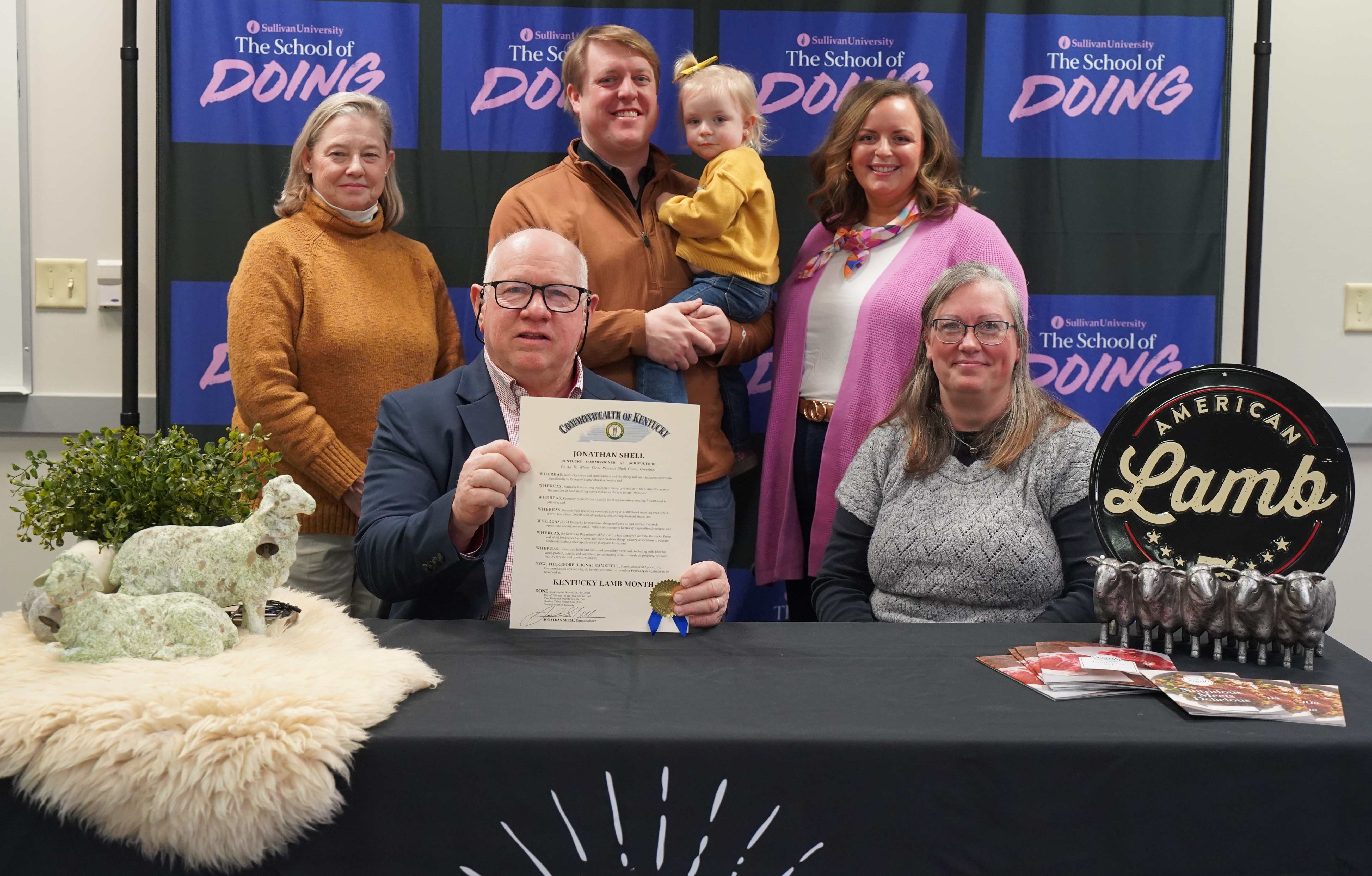
Kentucky Department of Agriculture Deputy Agriculture Commissioner Warren Beeler, seated at left, proclaimed February as Lamb Month in Kentucky today at Sullivan University's Lexington campus. Joining Beeler were members of the Kentucky Sheep and Goat Development Office and representatives from the sheep industry.
Kentucky Department of Agriculture celebrates February as Lamb Month
Sheep industry adds more than $7 million to Kentucky revenue
LEXINGTON, Ky. (Feb. 9, 2026) – Kentucky Department of Agriculture (KDA) officials and members of Kentucky’s sheep and lamb industry gathered today to celebrate February as Lamb Month in Kentucky. KDA Deputy Agriculture Commissioner Warren Beeler presented a signed proclamation at Sullivan University’s Lexington campus while also presenting culinary students with the American Lamb Board CurricuLamb – educational materials about American lamb designed for chefs.
“Many Kentucky farmers chose to add sheep to diversify their livestock options,” Kentucky Agriculture Commissioner Jonathan Shell said. “Packed with protein, lamb is a perfect lean meat. But sheep are also an excellent source of milk and fiber as well. Every day, but this month in particular, we salute the value sheep and lamb add to our farms.”
About 5 million sheep are raised by roughly 80,000 farmers and ranchers across the United States. With more than 12 million acres of agriculture land in Kentucky, the Commonwealth is home to 74,000 head of sheep and lamb. Those 74,000 are spread over more than 2,774 sheep producers who are dedicated to producing high quality products for consumers.
“Kentucky’s sheep industry continues to gain strong momentum, creating real opportunities for producers across the Commonwealth,” said Flemingsburg farmer Zack Schwartz, president of Kentucky Sheep and Wool Producers. “From small family farms to larger operations, sheep farmers are showing that our industry has a strong and sustainable future. Kentucky Sheep and Wool Producers are working every day to meet the growing demand for high-quality American lamb products. Lamb has a long and proud history in our state, and we’re proud to carry that tradition forward.”
Kentucky has a strong tradition of sheep production in the U.S. with the number of head reaching as high as over a million in the mid to late 1940s. The number of Kentucky’s sheep industry declined in the last 40 years, but with the help of the Kentucky Sheep and Wool Producers Association and the American Sheep Industry Association, those numbers are on the rebound as producers are retaining stock to grow their operations.
The Kentucky sheep industry adds more than $7 million in revenue to Kentucky’s agriculture receipts. For 2025, market lamb and sheep inventory decreased by about 4 percent, partially because 2024 saw a record-high lamb inventory move through the market. Despite the decrease in total inventory for 2025 the breeding ewe numbers were steady, indicating sustained, long-term reproductive capacity for the state. With solid markets, an increase in retail demand, growing grazing opportunities in the state, and increased value-added opportunities for wool, this industry is expected to keep growing in the future.
February serves as a reminder of the great versatility and value of sheep and lamb. In addition to lamb being a source of protein, zinc, selenium and B vitamin, it’s also a good source of iron and riboflavin. Numerous products and byproducts also come from sheep, including milk, fiber for wool, and lanolin, a natural moisturizer. Across the world, farmers also use sheep to combat noxious weeds on their property, promote healthy forests, and prevent wildfires.
To celebrate Lamb Month, purchase lamb from your local grocery store, specialty shop, farmers' market, or butcher shop. The Kentucky Sheep and Goat Development Office offers information on its website with tips cooking the lean meat. The website also offers a buyer's guide for lamb at: kysheepandgoat.org/on-your-plate.