Kentucky's Food Is Medicine Initiative changing lives
Op-ed from Commissioner Jonathan Shell and Melanie Landrum
FRANKFORT, Ky. (July 30, 2026) – Kentucky faces a chronic disease crisis. More than 40 percent of our adults live with at least one chronic illness such as diabetes, heart disease, hypertension, and obesity. Together, these diseases cost our state more than $29.4 billion in health care spending annually.

These challenges affect not only individual patients, but also entire communities where access to healthy, nutritious meals is often limited. This is why Kentucky's growing Food Is Medicine initiative matters.
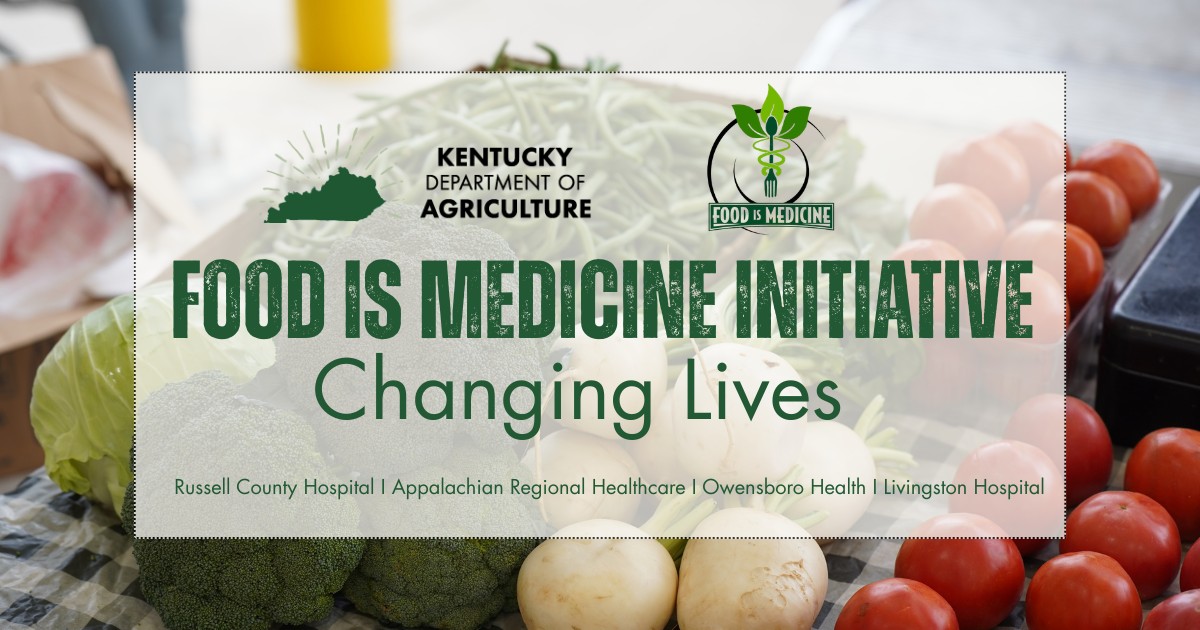
Earlier this year, Kentucky became the first "Food Is Medicine" state in the nation following passage of Senate Joint Resolution 23. The initiative, led by the Kentucky Hospital Association and the Kentucky Department of Agriculture, is helping connect patients with healthier foods while also supporting Kentucky farmers, strengthening local food systems, and improving long-term health outcomes.
The concept is straightforward: healthier food can help improve health outcomes, prevent chronic disease, and support recovery. But its impact extends well beyond hospital walls. Food Is Medicine programs create opportunities to support local agriculture, expand markets for Kentucky farmers, and keep more food dollars circulating within local communities.
Across Kentucky, hospitals are already putting this vision into practice.
Appalachian Regional Healthcare (ARH) is helping lead this work both statewide and in the communities it serves. ARH President and CEO Hollie Harris Phillips serves as a statewide co-lead for Kentucky’s Food Is Medicine initiative, and the health system is putting that leadership into practice through RootedRx, a produce prescription program across Letcher and Perry counties. RootedRx couples produce vouchers for farmers’ markets with Lifestyle Medicine shared medical appointments, which include nutrition education, physical activity, cooking demonstrations and more. The system also utilizes local produce and protein in 11 of its cafeterias and subsidizes a community supported agriculture (CSA) program for its employees in six locations, where ARH covers 50 percent of the cost of the produce boxes.
Other hospitals across Kentucky are also advancing Food Is Medicine in ways that reflect their local communities. In western Kentucky, Livingston Hospital recently partnered with Rittenberry Farms, a multi-generational family farm in Burna, to provide locally raised beef and pork products through the hospital. The partnership gives patients and community members greater access to fresh, locally sourced food while supporting Kentucky producers and strengthening the local economy. Owensboro Health organizes cooking demonstrations and community farmers' markets focused on nutrition education and healthier lifestyles. Russell County Hospital provides medically tailored meals made with locally grown meats and vegetables to patients managing diabetes.
These are just a few examples of how more than 60 hospitals across Kentucky are partnering with local farmers, food banks, and community organizations to connect patients with nutritious food while highlighting the importance of Kentucky-grown agricultural products.
Why does this matter so much in rural Kentucky? Because hospitals and agriculture often serve as foundational institutions in these communities. Rural hospitals are among the largest employers in their regions, while farming remains central to local economies and community identity. When these sectors work together, the benefits extend far beyond either one. Healthier communities and stronger local economies go hand in hand.
Local farmers’ markets hosted at hospitals are connecting families directly with fresh produce and locally grown products. Nutrition education programs and cooking demonstrations are helping patients better manage chronic conditions. Medically tailored meal initiatives reinforce what we know to be true: food and health are inseparable.
No single initiative can solve every health care challenge facing Kentucky. But improving access to healthy food, supporting preventive care, and strengthening local partnerships between health care and agriculture can make a real difference for patients and families across the state. From reducing readmissions to lowering patients’ A1C levels, the Food is Medicine initiative is making impressive strides in improving the health of the Commonwealth.
Kentucky is demonstrating national leadership by showing how health care providers, farmers, and community organizations can work together to improve public health while strengthening local economies and supporting rural communities.
Jonathan Shell serves as Kentucky Commissioner of Agriculture.
Melanie Landrum serves as the Kentucky Hospital Association's interim CEO and Senior Vice President, Data, Operations, and Innovation.