
Kentucky Agriculture
Commissioner Jonathan Shell
Contact Us
AgNet
  • About the KDA
      KDA Offices, News & Grant information
      • Offices
      • Office of Commissioner
      • Office of Administrative Services
      • Office of Agricultural Marketing
      • Office of Agricultural Policy
      • Office of Communications
      • Office for Consumer & Environmental Protection
      • Offices
      • Office of Legal Services
      • Office of State Veterinarian
      • KDA Executive Staff
      • KDA Internship Program
      • Request an Official Appearance
      • News
      • Kentucky Agricultural News
      • Press Releases
      • News Archive
      • KY AGNEWS Sign Up
      • KDA Grants
      • All KDA Grants
      • All Current KDA Grants And Funding Opportunities
  • Ag Policy
      Kentucky Office of Agricultural Policy
      • Kentucky Agricultural Development Fund (KADF)
      • Administrators
      • Applicants
      • Applicant Reporting
      • County Agricultural Development Councils
      • Kentucky Agricultural Development Board
      • Kentucky Agricultural Finance Corporation (KAFC)
      • Application Deadlines
      • Kentucky Agricultural Finance Corporation Board
      • Lender & Mentor
      • Loan Programs
      • Kentucky Agricultural Policy Publications
      • Annual Report 2019
      • Annual Report 2020
      • Annual Report 2021
      • Annual Report 2022
      • Annual Report 2023
      • Annual Report 2024
      • Kentucky Agricultural Economic Development Division (KAED)
      • Kentucky Agricultural Economic Development Division (KAED)
  • Animal
      Animal Health & Marketing Programs
      • Animal Health
      • Animal Disposal and Rendering
      • Animal Welfare and Complaints
      • Beekeeping
      • Brands
      • Composting
      • Disease Prevention
      • Animal Health
      • Emergency Management
      • Equine
      • Farmed Cervids
      • Livestock
      • Movement and Identification
      • Online Permitting System
      • Animal Health
      • Pollinator Protection Registration System
      • Poultry
      • State Veterinarian
      • Stockyards and Dealers
      • Stray or Abandoned Horses
      • Animal Marketing Programs
      • Aquaculture
      • Livestock
      • Market News
      • Purebred Breeders Directory
      • Shows and Fairs
  • Online Services
      KDA Online Services
      • Nuisance Weed Spraying
      • Nuisance Weed Spraying Program
      • Ag Businesses Directory
      • Ag Ringtones
      • ARD Inspector Search
      • Free Web Page Builder
      • Hay For Sale Listing
      • Hemp Licensing Portal
        (login required)
      • KDA Calendar of Events
      • Licensed Applicator Search
      • Licensing and Certification Log In Portal
      • Licensing and Certification Registration Portal
      • Nuisance Weed Spraying Program
      • Online Permitting System
      • Pest Control Company Directory
      • Pesticide Complaint Form
      • Pollinator Protection Registration System
      • Product Registration and Renewal System
      • Purebred Breeders Directory
      • Service Agency
      • Stray or Abandoned Horses
      • Weights, Measures & Motor Fuel Complaint/Request Form
  • Pesticides
      Environmental Servies & Training and Testing
      • Applicator Search
      • Licensing and Certification Portal
        (login required)
      • Nuisance Weed Spraying Program
      • Pest Control Company Directory
      • Pest Control - Agriculture
      • Pest Control - Structural
      • Pesticide Product Registration
      • Pesticide Complaint Form
      • Pesticide Search
      • Pesticide Training and Testing
      • Public Pest and Recycling Assistance
      • Pesticide License Renewal Portal Login
      • Pesticide Registration and Renewal
      • Training and Testing
      • Training and Testing
      • Product Registration
      • Product Registration
  • Plant
      Plant Marketing Programs
      • Plant Marketing
      • Plant Marketing
      • Forage/Hay Program
      • GAP-Good Agriculture Practices
      • Ginseng
      • Grape and Wine
      • Hemp
      • Hemp Licensing Portal (login required)
      • Horticulture
      • Organic
      • Produce Safety Program
      • Specialty Crop Block Grant Program
  • Promotional
      Promotional & Marketing Programs
      • Ag Businesses
      • Ag Education
      • Agritourism
      • Appalachia Proud
      • Buy Local
      • CSA - Community Supported Agriculture
      • Emergency Management
      • Farm License Plate
      • Farm Safety
      • Farm to Fork
      • Farm to School
      • Farmers Markets
      • Farmers Markets Directory
      • Farmland Preservation/PACE
      • Forage/Hay Program
      • Free Web Page Builder
      • Good Agricultural Practices - GAP
      • Marketing Grants
      • Homegrown By Heroes
      • International Trade
      • Junior Chef
      • KDA Grants
      • Kentucky Proud
      • Kentucky Wine
      • Livestock Tag
      • Local Food Purchase Assistance Grant
      • Market News
      • Mobile Science Activity Center
      • Promotion and Development
      • Raising Hope
      • Resilient Food Systems Infrastructure
      • Shows and Fairs
      • Woodlands
  • Regulatory
      Regulatory, Food, Environmental & Other Programs
      • Food Programs
      • Farm to School
      • Chefs in Schools
      • Local Food Purchase Assistance Grant
      • National School Lunch Programs
      • Senior Farmers' Market
      • Supplemental Programs
      • Regulation & Inspection
      • Aerial Recreational Devices
      • Amusement Ride Inspections
      • Egg Licensing
      • Grain Licensing and Regulation
      • Grain Licensing Search
      • Licensing and Certification Portal
        (login required)
      • Teen & Tobacco
      • Weights and Measures
      • Weights, Measures & Motor Fuel Complaint/Request Form
      • Environmental Services
      • Pest Control - Agriculture
      • Pest Control - Structural
      • Pesticide Complaint Form
      • Pesticide Product Registration
      • Pesticide Training and Testing
      • Public Pest and Recycling Assistance
      • Other
      • Brands
      • Composting
      • Market News
      • Organic Program
      • Rendering
      • Stockyards and Dealers
  • AGNET
  • Contact Us
Yellow-Legged Hornet

What Is Yellow-Legged Hornet?

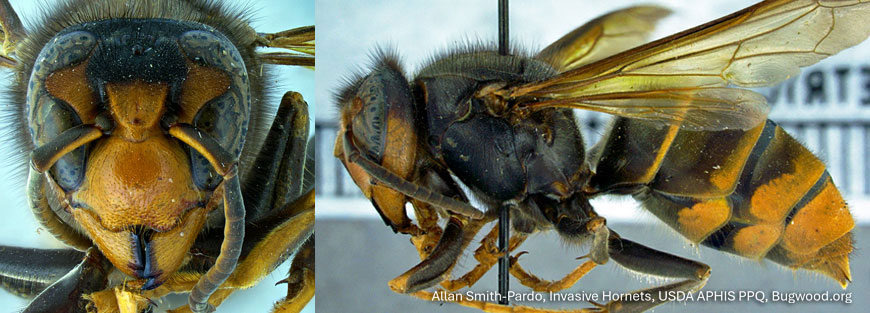
The Yellow-Legged Hornet (Vespa velutina) is an invasive hornet species that has gained international notoriety for its rapid expansion and specialized predation on honey bees. It is native to regions of Southeast Asia, however it has invaded several European countries causing devastating losses to beekeepers and the beekeeping industry. It was first confirmed in the United States in Savannah, Georgia, in August 2023. The Yellow-Legged Hornet has now spread throughout coastal South Carolina and Georgia, and in December of 2025 a nest was found in York County, South Carolina – less than 200 miles from Kentucky’s boarder.


What Is The Risk to Honey Bees?

    A full information page is currently in development and will include:
  • Yellow-Legged Hornet consumes honey bees as a large part of its diet. Research has shown that in urban areas the Yellow-Legged Hornet’s diet is 70% honey bees and in agriculture areas honey bees make up 30% of its diet.
  • The Yellow-Legged Hornet hunts for honey bees by “hawking’ at beehive entrances. Our honey bees have no natural defenses against these predators and will often react by remaining inside of the beehive until they eat through their resources and starve.
  • Hawking Video


What Is The Risk to Kentucky Agriculture?

    If Yellow-Legged Hornet is allowed to establish in Kentucky, we will see multimillion dollar impacts in multiple sectors
  • Beekeepers: This pest poses a direct threat to the beekeeping industry in Kentucky
  • Specialty Crop Growers: In addition to honey bees, the hornet aggressively targets native pollinators as well. The loss of honey bees and native pollinators will have a direct effect Kentucky’s specialty crop industry as many of our specialty crops (watermelons, fruit trees, berries, etc.) require pollination.
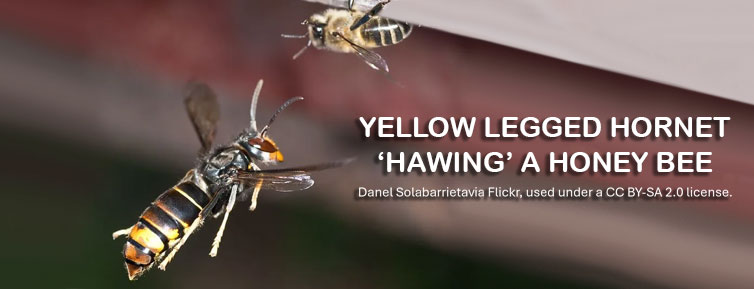
Hornet Hawking

Life Cycle

    March-April
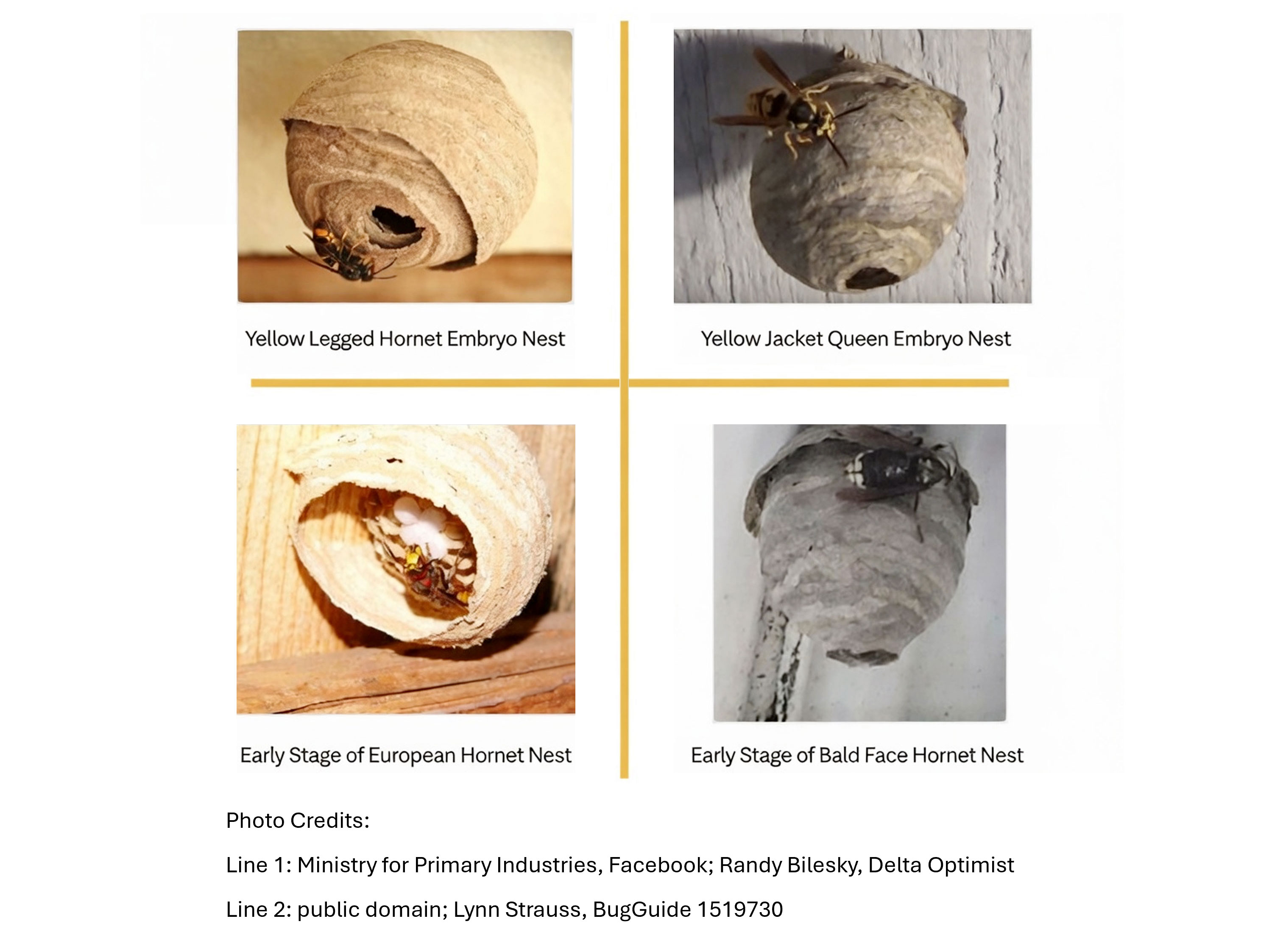
  • Queen Yellow-Legged Hornets will emerge in the spring and begin making a golf ball to tennis ball sized embryo nest. She will raise a first generation of worker hornets.
  • June-August
  • Workers help to expand the embryo nest or may relocate and build a larger primary nest that can be basketball sized. These primary nests can be built on to structures, bushes, or trees. The queen will continue to lay eggs and build up the worker population.
  • August
  • Towards the end of the summer, Yellow Legged Hornets may out grow the primary nest and relocate to a much larger secondary nest that is often located 60ft in a tree top, These secondary nests can grow as large as a car tire.
  • This is the most likely time of year you will see these hornets.
  • September – October
  • The colony will start producing reproductives.
  • November – December
  • The Yellow Legged Hornet Queen and workers will die in the late fall or early winter.
  • Mated queens will find a protected place to overwinter. Queens overwinter in leaf piles, mulch, or any cavity that is protected from harsh winter conditions.
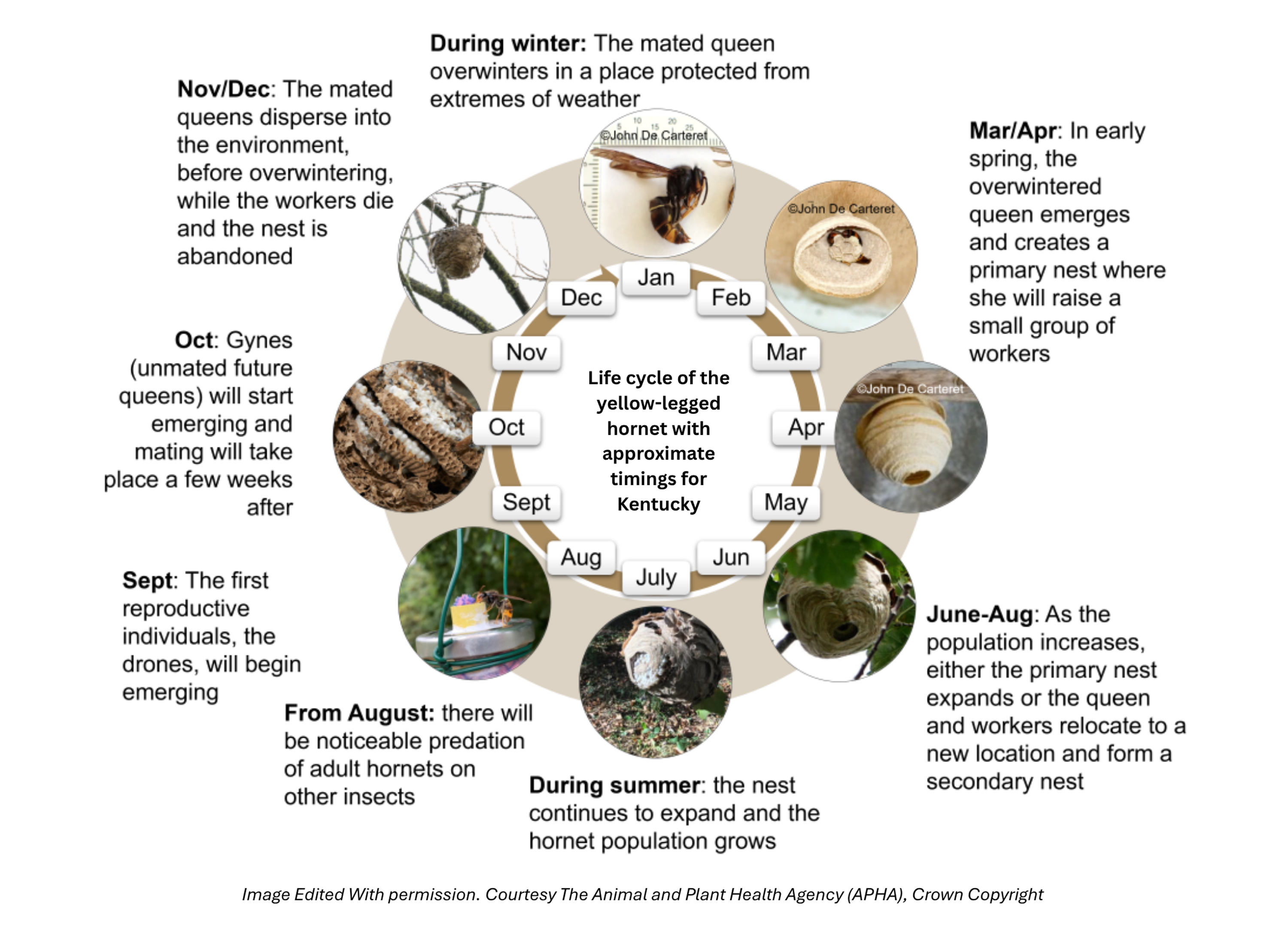
Hornet Life Cycle


Look-a-Likes

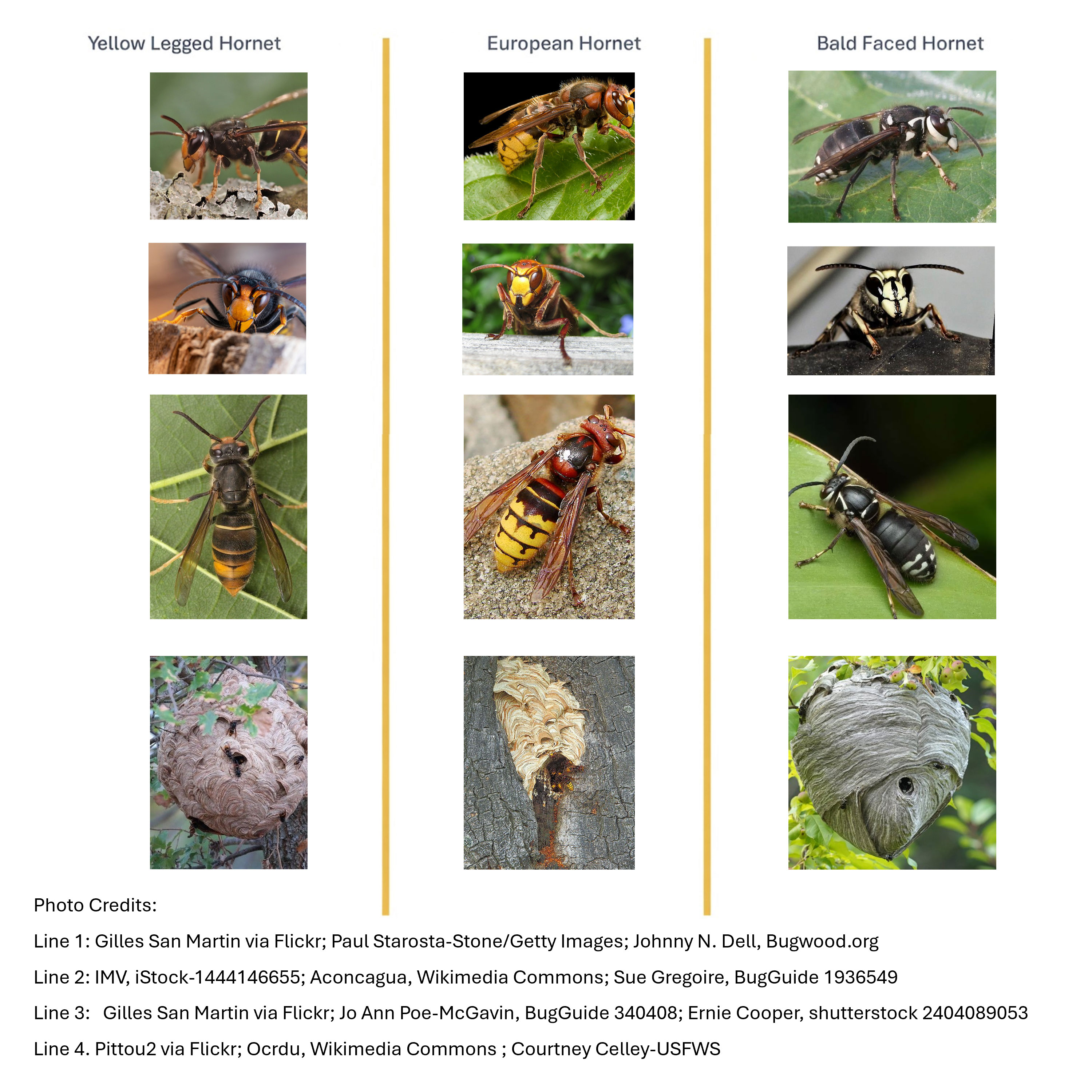
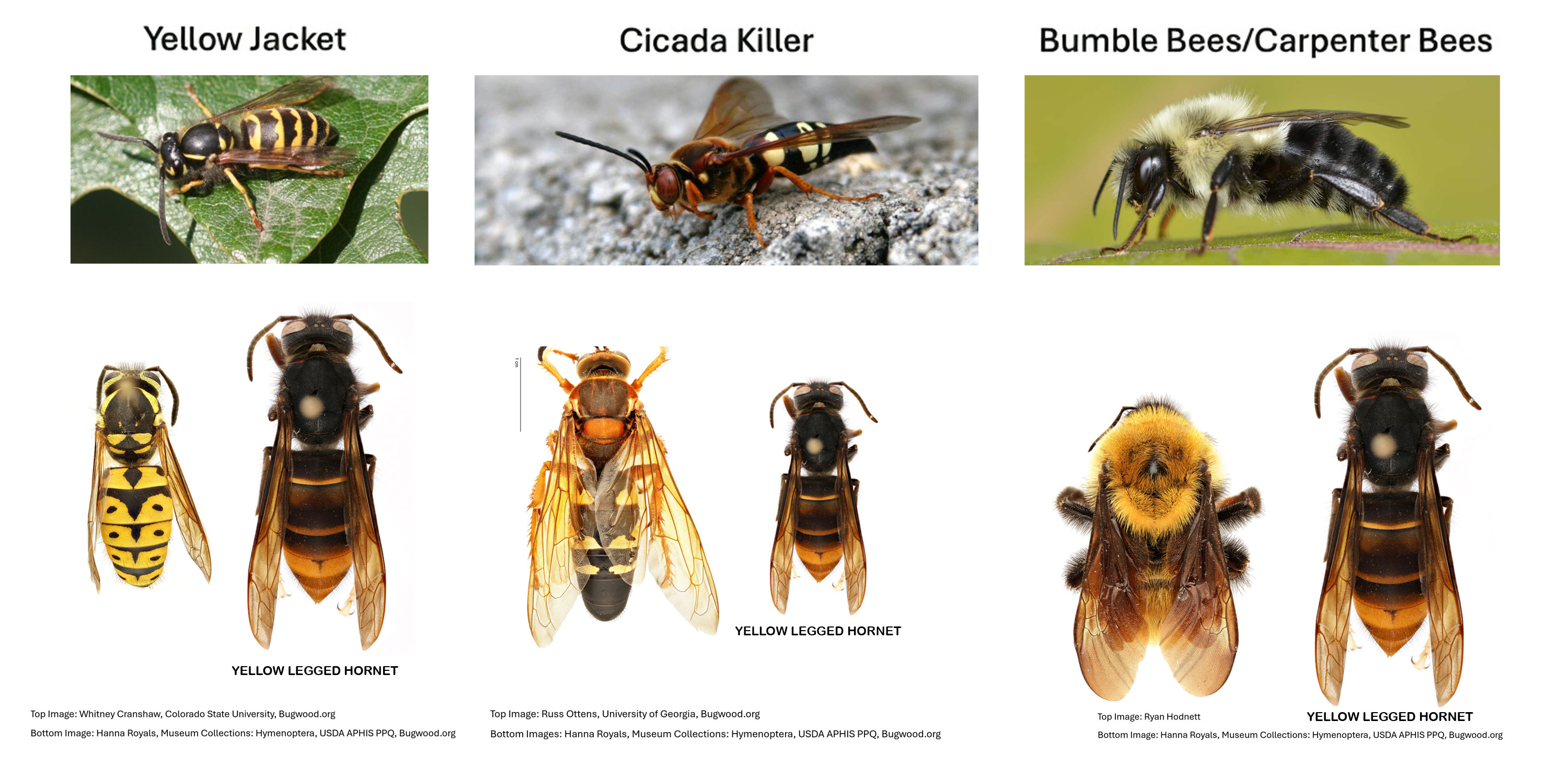
There are many species of wasp and other insects in Kentucky that may be confused for Yellow-Legged Hornet.


Yellow Legged Hornet compared to honey bee Hornet & Honey Bee
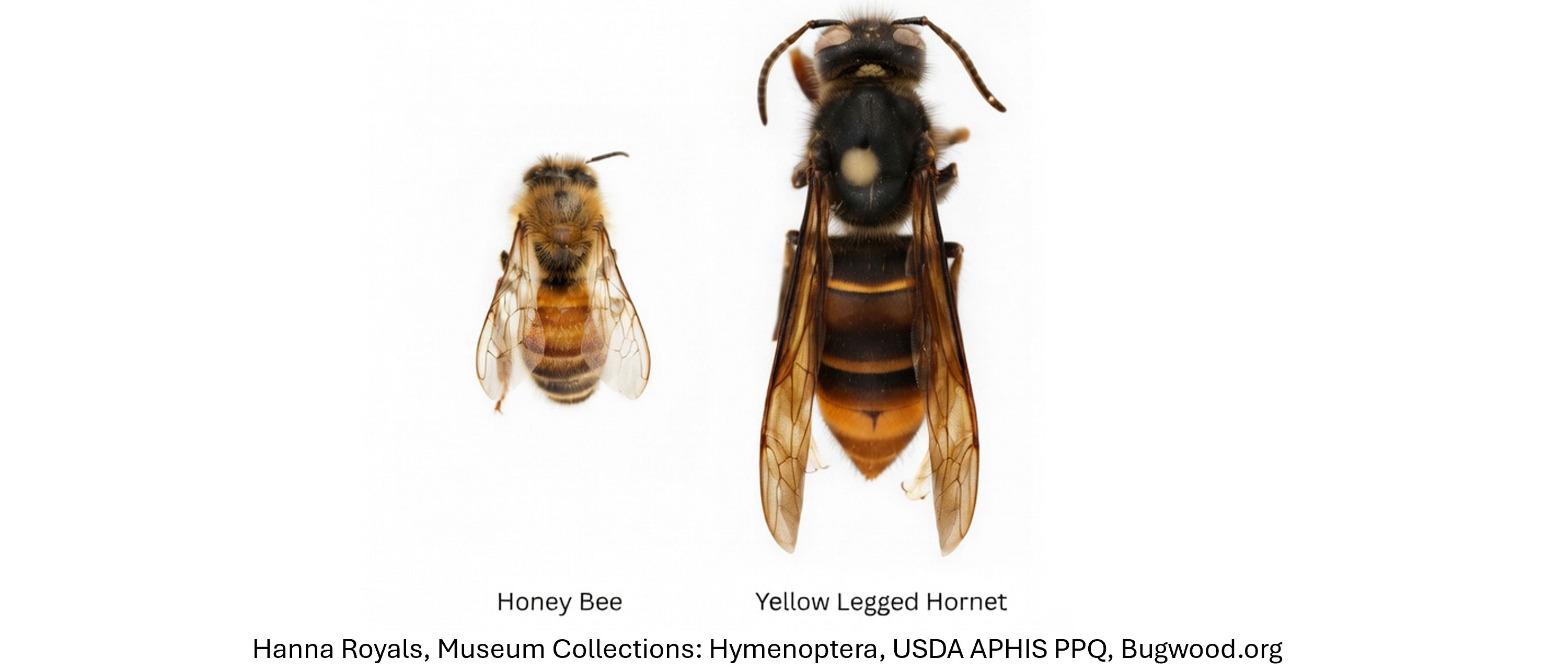

Hornet Species Comparison Hornet & Honey Bee


Other Look A Likes Hornet & Honey Bee


Embryo Nest Look-a-Likes Hornet & Honey Bee


How To Trap Yellow-Legged Hornets

There are several methods for trapping Yellow Legged Hornet. Most importantly, always stay alert for live hornets found in traps as they can sting you!

Bait
Per the recommendation of Georgia Department of Agriculture Yellow-Legged Hornet Traps are most effective when baited with a 1 part brown sugar to 2 part grape juice bait. Add a small amount of dish soap to your trap to act as a surfactant that will better trap wasps and prevent them from flying out of the trap.
A simple recipe is: ½ cup of brown sugar + 1 cup of grape juice + one drop of dish soap.
Note: As this bait begins to ferment it will become very attractive to wasps, but will not be attractive to honey bees. If you are concerned about accidently trapping bees, allow the bait to ferment for 2-3 days before pouring into your wasp trap. Other wasp species you might find in your traps include: yellow jackets, European hornets, bald faced hornets, and paper wasps. Become familiar with look-a-like species to better identify what is in your trap.

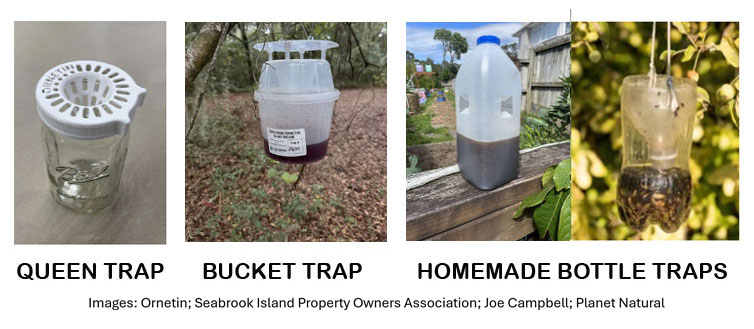
Yellow Legged Hornet Queen Trap
Queen traps are plastic funnels that can be screwed onto a wide mouth mason jar. The holes of these funnels are designed for the Yellow-Legged Hornet to be able to crawl into but not crawl out. While specifically designed for queens, these traps can be used throughout the year for trapping queens and workers. Here are some resources for Yellow-Legged Hornet Queen Traps

  • Ornetin Trap
  • 3D Print File

Bucket Trap
These are heavy duty traps used for a variety of insect survey work. They are durable and should last multiple seasons. Note: avoid yellow colored traps as these may attract curious bees. Here are some resources for Bucket Traps.

  • Great Lakes IPM: GL/IP-2353-03
  • Evergreen Growers Supply: Unitrap

Homemade Bottle Traps
There are several styles of homemade bottle traps that are effective for trapping wasps. Reusing old 2-liter bottles, milk jugs, or juice bottles can all be used to make a bottle trap. Here are two great videos for how to make bottle traps:

  • Georgia Department of Agriculture
  • Clemson University

Hornet traps

How Can You Help?

  • Report sightings of Yellow-Legged Hornets or suspected nests.
  • Remember it is important to not disturb or remove the nests. If you do not capture the queen, she and any remailing workers can begin to build a new nest somewhere else.
  • Check vehicles and trailers for hitchhikers if you vacation in Georgia or South Carolina.
  • Check loads of mulch, potted plants, and other open materials coming from infested areas of South Carolina and Georgia where the Yellow-Legged Hornet queens may be hiding to overwinter.
  • Become a Citizen Scientist! Join our Yellow-Legged Hornet Hunting Team and build your own hornet trap. Help us keep Kentucky Yellow-Legged Hornet free.

Safety Disclaimer

The information provided is for educational and informational purposes only. The Kentucky Department of Agriculture does not recommend that individuals attempt to remove or destroy hornet or wasp nests on their own. These insects can be dangerous. Always contact a licensed pest control professional. The Kentucky Department of Agriculture is not responsible for injuries or damages resulting from self-removal attempts.


Are Yellow-Legged Hornets Dangerous to Humans and Pets?

These hornets can and will attack humans and pest if disturbed. Their sting can be very painful and cause large red welts (similar to other hornet or wasp stings). Some people may have an anaphylactic reaction, therefor be cautious to avoid getting stung is important.


Recommended Resources

  • United States Department of Agriculture: Yellow-Legged Hornet
  • Georgia Department of Agriculture: Yellow-Legged Hornet
  • Clemson University: Invasive Species Spotlight
  • Asian Hornet: The Beekeeper's Guide to Defense against the Yellow-legged Hornet Vespa velutina, 2025. By Andrew Durham

Office of State Veterinarian

Animal Disposal and Rendering
Animal Welfare Complaint Form
Emergency Programs
Equine
  • Equine Export Statistics
  • Equine Herpesvirus 1
  • Equine Infectious Diseases & Emergency Response
  • Equine Infectious Diseases Archive
  • Equine Infectious Anemia
  • Equine Viral Arteritis
  • Importing from CEM Countries
  • Stray or Abandoned Horses
  • West Nile / EEE Summary Information
  • Farmed Cervids
    Honey Bees
  • Pollinator Protection Registration System
  • Yellow-Legged Hornet
  • Livestock
  • Livestock Welfare
  • Movement and Identification
    Poultry
  • Facts about Avian Flu
  • Stockyards and Dealers
    Swine
    Online Permitting System

    Forms & Documents

    • Yellow-Legged Hornet Nest Poster
    • Yellow-Legged Hornet Identification Guide

    KDA Video

    Agriculture in Kentucky

    Agriculture is more than a part of life, it’s a passion and commitment to provide the fiber, feed, and shelter the world needs.

    Equine Industry in Kentucky

    Agriculture is more than a part of life, it’s a passion and commitment to provide the fiber, feed, and shelter the world needs.

    Kentucky Farmers' Markets

    Kentucky Farmers' Markets bring fresh, local produce, meats, eggs, and handmade goods directly to communities. These markets support local farmers and offer a vibrant shopping experience with seasonal products, live entertainment, and family-friendly activities.

    Sunshine Class

    The Sunshine Class is a unique opportunity for special needs individuals to engage in Kentucky agriculture by showing livestock. To learn more about how to get involved visit kyagr.com/sunshine/

    ABOUT KDA AGNET CONTACT US REQUEST AN APPEARANCE
    KY Department of Agriculture |Phone: (502) 573-0282 |Fax: (502) 564-2133 |1-800-327-6568 |Disclaimer |Ag links
    © Kentucky Agriculture Department. All rights reserved.
    Kentucky Proud